

Webshop FlexJuf
The Learning Challenge
The Learning Challenge
Couldn't load pickup availability
Learning is different from collecting facts. For students to learn deeply, friction is necessary: doubt, not knowing what to do for a moment, a cognitive conflict. This ultimately leads students to meaningful insights. James Nottingham describes how to achieve this in "The Learning Challenge."
Teachers and students often think that learning should be easy. Just ask colleagues and children who the best students are. Most will point to students who 'just get it', who 'know things without apparent effort', or who 'have natural talent' for something. But these are precisely characteristics that have nothing to do with learning. Learning is more of a challenge.
To learn deeply, you need to be on the boundary between knowing and not knowing. You acknowledge that you don't know certain things yet, but that you can learn them—with effort and the right strategy. Sometimes learning means we have to reorder what we already know, or let go of existing knowledge to understand something better. As Piaget said: "To learn, imbalance is necessary." This means that you only learn deeply when what you know is not in balance with what you encounter. When you think: 'Hey, how does this work, I don't understand it' or: 'This isn't right, is it?', then the balance is disturbed, and you get the chance to learn and grow.
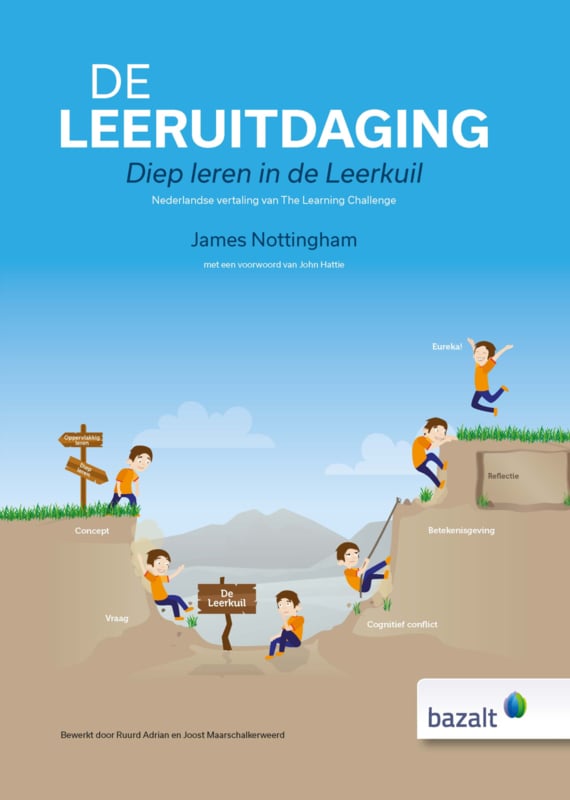
Therefore, as a teacher, you should create situations in which students experience this imbalance. You want to sow doubt and challenge the way students think with different or better ideas. You do this with the Learning Challenge. This makes learning a stimulating and collaborative effort between student and teacher. The Learning Pit is at the heart of the Learning Challenge. You are in the Learning Pit when you have unresolved or contradictory ideas about what you are trying to understand. You then experience a cognitive conflict. By inviting students to step into the Learning Pit, you challenge them to achieve deep learning, with the goal of developing meaningful, lasting insights.
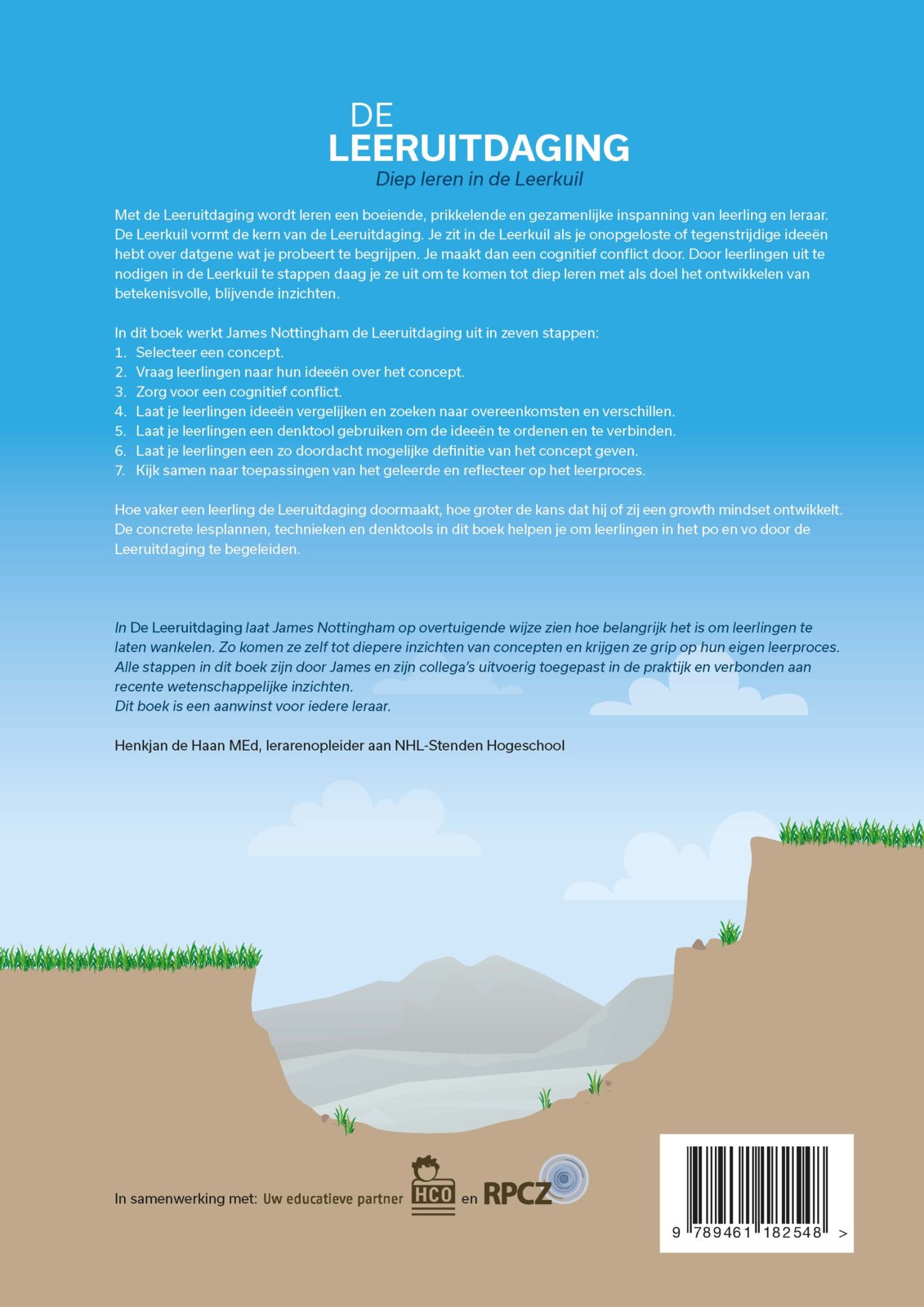
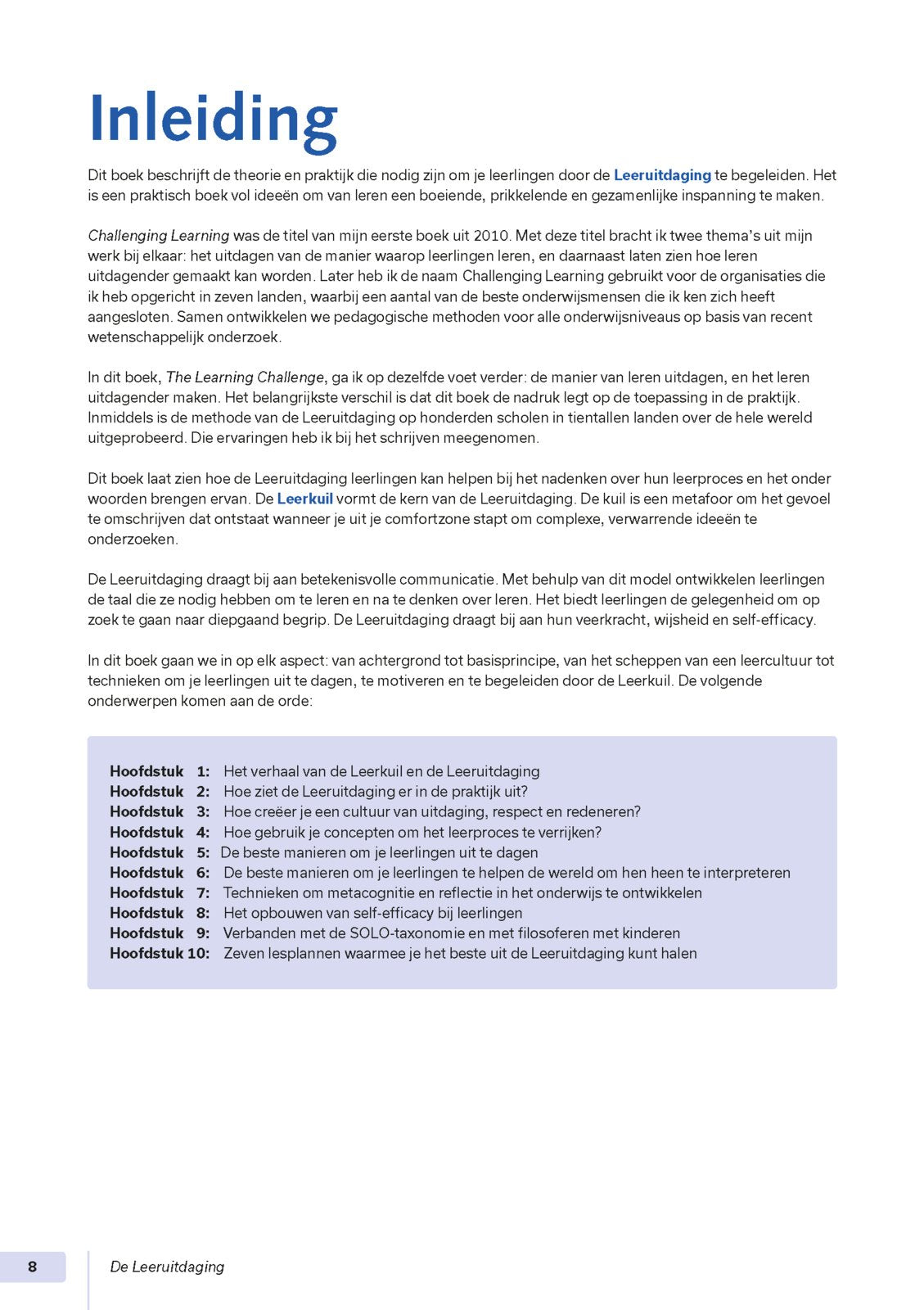
In this book, James Nottingham elaborates on the Learning Challenge in seven steps:
- Select a concept.
- Ask students for their ideas about the concept.
- Create a cognitive conflict.
- Have your students compare ideas and look for similarities and differences.
- Have your students use a thinking tool to organize and connect ideas.
- Have your students provide the most thoughtful definition of the concept possible.
- Together, look at applications of what has been learned and reflect on the learning process.
The more often a student goes through the Learning Challenge, the greater the chance that he or she will develop a growth mindset. The concrete lesson plans, techniques, and thinking tools in this book will help you guide students in primary and secondary education through the Learning Challenge.
"In 'The Learning Challenge,' James Nottingham convincingly demonstrates the importance of letting students stumble. This way, they gain deeper insights into concepts themselves and get a grip on their own learning process. All steps in this book have been extensively applied in practice by James and his colleagues and are linked to recent scientific insights. This book is a valuable asset for every teacher."
-Henkjan de Haan MEd, teacher trainer at NHL-Stenden University of Applied Sciences-
Deel